
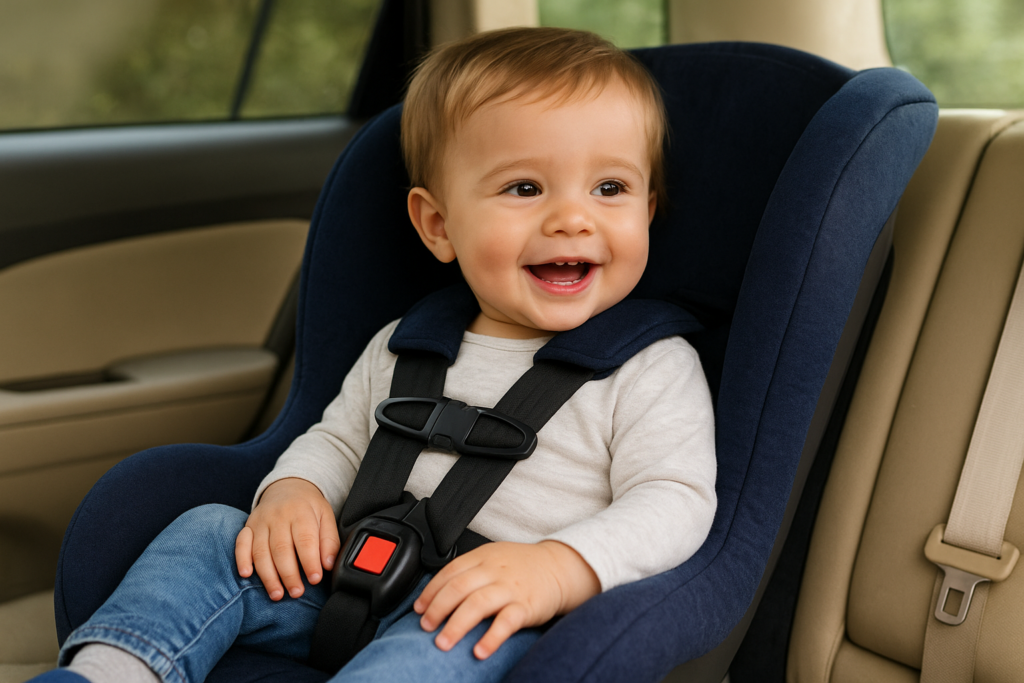
Can you spot the error in this car seat picture?
It’s a common mistake that can affect how seriously this child could be injured in a crash.
Also, do you know if this is the best position for him? Should he still be rear-facing? How do you know? Where do you find out that information?
Scroll to end of blog to see the answer
On average that 3 out of 4 car seats are installed incorrectly???
Yes….you heard that correctly…..3 out of 4 car seats are installed incorrectly
It’s a surprising (and a little scary) statistic — especially when you realize most parents think they’ve done everything right. That’s why car seat inspections are so important.
Even small mistakes — a loose harness, a twisted strap, the wrong recline angle — can reduce protection in a crash.
Let’s Be Honest… It’s Complicated
But hey… when you have to learn a whole new language — lock-offs, latch plates, anchors, retractors — confirm with two manuals (your car seat and your vehicle), and somehow choose the “right” seat from thousands of options… all while running on no sleep and surviving on caffeine — how does anyone get it right?!
The truth is, car seat safety can be complex — and it’s only getting trickier as technology evolves. That’s exactly why Certified Child Passenger Safety Technicians (CPSTs) exist. We go through hours of hands-on training, testing, and continuing education just to stay up to date. And even then, a good technician will tell you: we’re still learning too.
So if you’ve ever found yourself sweating in the driveway, knee on a car seat, YouTube video paused for the 10th time… you’re not alone.
What Is a Car Seat Inspection?
A car seat inspection is a hands-on appointment with a Certified Child Passenger Safety Technician (CPST).
During your inspection, a certified technician will:
Confirm your seat fits your child’s age, height, weight, and developmental level
Verify proper installation in your specific vehicle
Adjust harnessing, recline angle, and tether placement
Check for recalls, expiration dates, or missing parts
Guides you how to reinstall and adjust it confidently yourself
The goal isn’t just to fix—it’s to educate. You’ll leave your inspection appointment knowing exactly how to keep your child safe every ride.
Why It Matters More Than Ever
As cars and car seats evolve, new safety standards, designs, and features are being introduced constantly. What worked two years ago might not apply to your vehicle or car seat today. Regular inspections ensure your setup remains safe as your child — and the technology — grows.
1. Because 3 in 4 Car Seats Aren’t Installed Correctly
That’s 75% of families unknowingly putting their child at risk. An inspection ensures your seat is correctly installed, tightened, and angled — the way the car and seat manufacturer intended.
2. Because Every Vehicle Is Different
No two car seats or cars fit the same. Technicians understand how to adjust for unique seating angles, seat belt systems, and LATCH setups to ensure the best fit for your vehicle.
3. Because Kids Grow Fast
Transitioning from rear-facing to forward-facing, or adding a booster seat, changes how your seats should be positioned. We’ll guide you through every stage of your growing family’s journey.
4. Because Hidden Risks Exist
From expired seats to recalled models or missing parts, even a gently used seat can be unsafe. Inspections catch these issues before they become dangerous.
When to Schedule a Car Seat Inspection
You should book an inspection:
Before your baby arrives (for that first hospital ride home)
After buying a new seat or switching vehicles
When your child moves up a stage (rear-facing to forward-facing, or to a booster)
If something feels off — even if you just want reassurance
Car seat inspections aren’t just about following rules —
they’re about confidence, education, and protecting what matters most
Ready to Feel Confident?
Whether you’re a first-time parent preparing for baby’s arrival or juggling multiple kids in different stages, we’re here to help you make sense of it all. Schedule your car seat inspection with Buckle Up Right by CPR Done Right and make sure every ride is as safe as possible — without the stress, guesswork, or late-night YouTube marathons.

The chest buckle should be at armpit level. In this image the chest buckle would be safest if moved up.
Deciding when to turn a child forward-facing depends on several factors — age, weight, height, developmental stage, and the car seat’s limits.
Research continues to show that it’s safest to keep your child rear-facing for as long as possible, as long as they’re within the seat manufacturer’s limits.
Rear-facing isn’t just a recommendation — it’s a proven way to reduce injuries in a crash